

How to Respond to Difficulties?
It is an integral part of our Iman that all circumstances, good or bad, are from Allah Ta’ala جل جلاله. Difficulties are not permanent; they will last according to the decision of Allah Ta’ala جل جلاله. The lesson is that as slaves, we are compelled to adopt patience. There is no point in consuming ourselves in anxiety because Allah Ta’ala جل جلاله has predetermined the duration of our difficulties. To be patient is a compulsion (Wajib) upon us. At the same time, we must never underestimate the power of dua. The duty of slaves is to implore Allah Ta’ala جل جلاله to alleviate our anxieties. We cannot be hasty but should rather reflect whether we have been involved in any actions that has brought about the difficulties. In most instances, our actions define our conditions.
Another impediment in our lives is that we have forgotten how to weep in the Court of Allah Ta’ala جل جلاله . It is essential to acknowledge our waywardness and negligence, offer a sincere repentance, stay away from disobedience and be steadfast on the laws of Shariah. If we condition our minds in this manner, we will never be affected by any challenges but we will rather attain comfort in that our conditions are nothing but the decree of Allah Ta’ala جل جلاله .
As a warning, let us remind ourselves that we will certainly be taken to task for our sins. Many people in authority engage in a host of sins thinking that their positions will protect them. Understand that Allah Ta’ala جل جلاله is All Wise, All Knowing and All Powerful. Have we not witnessed people being siezed by illnesses whereby they become a lesson for the people? Shaikh Abdur Rahman ibn al-Jawzi رحمه الله has stated that in his experiences, he is convinced that those who choose disobedience will not escape punishment. May Allah Ta’ala protect us all!
[hr height=”30″ style=”default” line=”default” color=”” themecolor=”0″]
Be Careful of Your Actions Done in Solitude
Shaikh Abdur Rahman ibn al-Jawzi رحمه الله has said that our external actions give testimony to what we were involved in privacy. Our Masha’ikh رحمهم الله were extremely fearful of the wrath of Allah Ta’ala جل جلاله , they hoped for reward for their actions, they showed the utmost respect to Allah Ta’ala جل جلاله in solitude and annihilated their pleasures for His sake.
Our conduct definitely has an impact on the hearts of others. It is like a person burning incense; the fragrance will spread far and wide although the people will not be able to trace its source. The effort (towards virtues) depend on the desires given up and the fragrance is linked to the effort. We notice that people will extol the praises of those who have sacrificed their desires for the pleasure of Allah Ta’ala جل جلاله and there will be an intense respect for them in the hearts. Many are remembered long after they have passed away; this is proportionate to how they feared Allah Ta’ala جل جلاله . Once someone asked Hazrat Hassan al-Basri رحمه الله as to why he was perpetually overwhelmed with grief, he never smiled and was constantly weeping. He replied that he was consumed by the fear of Allah Ta’ala جل جلاله Who is the King of Jahannum. Furthermore, he was plagued by the fear of being deceived by Shaitan and his Nafs which could result in him being punished! ! سبحان الله This was the fear of Allah Ta’ala جل جلاله expressed by this eminent saint; today nearly 1400 years later we discuss his life with reverence and admiration.
There are those who don’t fear Allah Ta’ala جل جلاله in solitude but fear the opinions of people. They are like those who diffuse an abhorrent odour which gives testimony to the filth of their sins. They will be remembered for their sins for a long time. There are others who have both good deeds and sins; they remain unknown. Neither are they praised or blamed.
Shaikh Abdur Rahman ibn al-Jawzi رحمه الله advised that we reflect on the consequences of our sins. The learned Shaikh رحمه الله has shared the advices of Hazrat Abu Darda رضي الله عنه who said; “When a man disobeys Allah Ta’ala جل جلاله He causes people to dislike him without him realising it.” We should therefore ponder and understand the reality of our actions; exercising greater caution with regards to our actions in solitude. We need to reform both our inner and outer actions having this conviction that we will be rewarded or punished according to our intentions.
Shafeequl Ummah Hazrat Moulana Muhammad Farooq Sahib رحمه الله has so eloquently advised:
- Let us reform our intentions;
- Let us intend to reform ourselves
[hr height=”30″ style=”default” line=”default” color=”” themecolor=”0″]
Weddings, Walimas And Showers
Hazrat Maulana Yunus Patel Saheb رحمه الله has mentioned:
“There are many customs and trends which have their affiliation with the non-Muslim culture and lifestyle. Many Muslims, due to being afflicted with what appears to be a truly insecure and inferior complex, look towards and choose the customs and trends of the non-Muslims over that of the beautiful Sunnah. It seems as if the need is to secure a kind of acceptance in a non-Muslim society and just blend in with them–so that we are not recognized as Muslims. Sadly Bridal Showers and Baby Showers have become synonymous with the Muslim lifestyle as it is with the rest of the non-Muslim lifestyle.
Many may ask: What’s wrong with giving gifts, congratulating the bride-to-be or the new mother, or having a get together with friends?
There is nothing wrong with giving the bride or the new mother a gift, or congratulating the person. To give a gift and congratulate are from the teachings of Islam and would draw rewards but there are conditions to be met in even these noble deeds. What is extremely wrong and objectionable is the background to these good deeds. They are not within the parameters of Shari’ah. The picture of a typical bridal shower and baby shower is not typical with the Sunnah. It is typical of the non-Muslim way of life. By following suit, we fall into the sin of “Tashabbuh bil Kuffaar” (emulating the disbelievers). It is aligning oneself with those who have rejected Allah Ta’ala جل جلاله , who live their lives in immorality and disobedience (to their Owner, Allah Ta’ala جل جلاله the Owner and Master of All the worlds). Jews do not have baby showers prior to the birth of a child. Some do not buy any baby items or set up the nursery until the child is born. The custom stems from the idea that drawing attention to a happy occasion draws the attention of evil spirits and the evil eye. They believe that a baby shower is an outright invitation to the evil eye to descend upon the unborn baby in vengeance for rubbing your happiness in others’ faces and “counting your chickens before they hatch.”
Nikah is a great Ibaadah. Pregnancy and the birth of a child also have their requisites in Islam. However, the west has commercialized all of these noble occasions, and made them into money-making events. The sacredness of these occasions is forgotten. Today, Nikahs have taken on a distinct mould of a Hollywood or Bollywood style wedding – where the bride is dressed to look like a Christian bride or a Bollywood actress – with no sign of Islam on her; and the groom is dressed in a suit and tie, looking like a typical (non Muslim) Christian groom. Adding insult to injury is the extravagance and open sin at the time of the wedding and Walimah. One’s mind moves in the direction of the millions and millions who are suffering famine and starvation, who have no home, no water, no food, no clothing – but the Muslim ignores all that suffering just for some fleeting attention and praise???
All those hundreds of thousands of Rands wasted on draping a hall, on dressing the chairs, on wine glasses, on musicians, photography, on wedding cards that are thrown away, etc. is money which could have been the means of alleviating the plight of so many suffering people. One brother handed me an elaborate invitation card for his daughter’s wedding. I enquired as to the cost of the wedding card, and was told that each card cost R50. Advising him, I told him that almost all people throw away wedding cards. People generally dispose of them. So he should regard that as people throwing away hundreds of his R50 notes. Would he throw R50 notes into a bin? No. However, the throwing away of those cards is equal to throwing away R50 notes. That same money could have been used in making the Aakhirah (the Hereafter). Even those who are known to be religious will waste thousands on halls, on decor, etc. sacrificing the pleasure of Allah Ta’ala جل جلاله and Rasulullah صلى الله عليه وسلم. Those who were meant to set the noble example of the Sunnah, who we expect are living the Sunnah knowingly choose to forsake the Sunnah. Simplicity, which is part of Imaan, is a rare sight in these times.
Hazrat Aaishah رضي الله عنها related that Nabi صلى الله عليه وسلم said:
“Verily, the most blessed Nikah is that which involves the least difficulty (expenditure).”(Musnad Ahmad #25034)
We have a perfect Sunnah – a Perfect Way of Life in the life of our Nabi صلى الله عليه وسلم and in the lives of his Companions, men and women. We have what is superior to all other cultures yet we consider everything else. It shows great weakness if we give preference to the culture of the Christians, Jews and Idol worshippers over the noble Sunnah of Rasulullah صلى الله عليه وسلم. We are exchanging flawless diamonds for worthless stones and what an unprofitable exchange this is! What a great loss!
Nabi صلى الله عليه وسلم said:
“Whoever emulates a nation is from amongst them.”(Musnad Ahmad #4031)
In another Hadith, it is stated:
“A person is with whom he loves.”(Bukhari #6168)
Nabi صلى الله عليه وسلم also said that we will be raised on the Day of Reckoning with those whom we imitate in this worldly life. (Mujamul Awsat #6450)
May Allah Ta’ala جل جلاله save us from such disgrace and humiliation, Ameen.
Emulating the non-Muslim culture is one downfall but there are many more that are found in the Bridal and Baby Showers.The non-Muslims have coined a novel concept of begging – especially amongst the upper-class. It seems as if some, from amongst the wealthy, have developed an art to begging. They even have a name for it. In the name of Bridal Showers, Baby Showers, Registries, people gracefully and politely extend their hands, and they ask and take from others. The bride-to-be chooses her gifts from exclusive stores that offer a “registry” or she unashamedly hands out a list of those items she wants gifted to her. In the process, she places pressure and financial difficulty and sometimes a great burden on others – to purchase those gifts that she has chosen. At the get-together, these gifts and other gifts are presented to the bride-to-be, who opens them and shows them to all present – and each person can assess the kind of money that was spent on the gift given.
Let us now consider the various wrongs in this act:
A person is forced to purchase gifts that the bride has chosen – which may be beyond her budget in spending.
A person who gives something simple or inexpensive will feel ashamed and embarrassed, considering the manner in which gifts are being received and shown to others.
The Hadith encourages giving gifts because giving gifts creates Muhabbah (love). If Muhabbah is not created then this proves that either the giver or receiver in insincere. Sometimes, people give with intentions other than expressing their Muhabbah. However, there are many who request or are desirous of receiving and there is a kind of greed from the receiving side. This request or expectation (ishraaf) reveals insincerity from the one who is receiving. A gift must be given happily and willingly – and should be received graciously and thankfully. This is the Sunnah. However, when we ask of people, as in the case of registries, etc. – people will give, but they give unhappily and unwillingly. And if some gift is given, which is not to our liking, then we receive it without any appreciation and thanks. This is our lamentable condition.
Another aspect that has also been brought to attention is the immorality and shamelessness at such gatherings – with indecent talk, shameless dressing by Muslim women, inappropriate games, music, dancing and such filthy entertainment, that we would not want to bring on to our tongues. It is not permissible for a person to attend such gatherings. The Shari’ah instructs us:
‘It is not Permissable to be Present in a Gathering Where Allah Ta’ala جل جلاله is Being Disobeyed.’
Moreover, a person’s presence is aiding in promoting and glorifying what is *not* permissible. We are told *not* to assist each other in sin; rather to assist in what is righteous:

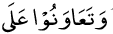
Help each other in righteousness and piety, and do not help each other in sin and aggression.
(Surah Ma’idah V2)
A bride-to-be is known for her modesty and shyness – but all of this is lost in adopting the culture of the non-Muslims. Their dressing and their fashion nurtures immodesty. Added to this, these sins are publicized and photographs are taken and uploaded on social media – for all and sundry to view the level of our degeneration.
The heart bleeds at this miscarriage of the Sunnah. Nay, this abortion of the Sunnah. How will we meet our Beloved Nabi صلى الله عليه وسلم on the Day of Judgment? How will we show our faces to the one whose entire life was sacrificed so that today we be the reciters of the Kalimah?
May Allah Ta’ala جل جلاله have mercy upon us since we stand to lose by adopting this culture. If we continue in this line and direction, we will lose the Pleasure of Allah Ta’ala جل جلاله and we will lose the great rewards for enlivening and practising the Sunnah.
We also stand to lose the companionship of Rasulullah صلى الله عليه وسلم at the thirst quenching fountain of Kauthar on the Day of Judgment and even stand to lose the success of our marriages due to having sacrificed the beautiful, noble Sunnah by means of our emulation of the Hollywood and Bollywood sinful culture.
If our allegiance is to Allah Ta’ala جل جلاله and His Rasool صلى الله عليه وسلم, then there should be no delay in repentance and mending our ways and coming back to what is pure and beautiful – Islam and the Sunnah. In this is the success of both worlds.
May Allah Ta’ala جل جلاله grant us the understanding, the concern and the Taufeeq to practice, Aameen.
Source: yunuspatel.co.za
[hr height=”30″ style=”default” line=”default” color=”” themecolor=”0″]
The four Conditions of Daily LIfe
Hadhrat Dr Abdul Hayy Arifi رحمه الله of Karachi, Pakistan has mentioned that in daily life there are one of four conditions that a person experiences:
- Conditions that conform to a person’s liking and wishes
- Conditions that are contrary to one’s wishes
- Recalling the mistakes of the past and the losses incurred thereby
- Fear of the challenges that lie ahead
Our response and approach to these four conditions should be as follows:
– When conditions are favourable and conforming one should express gratitude -Allah Ta’ala جل جلاله Allahumma lakal Hamdu walakashukru – this will preserve one’s goodness
– When conditions are adverse or unfavourable, recite Inna lillahi wa inna ilayhi rajioon- this will bring the reward of patience and grant one the proximity of Allah Ta’ala جل جلاله
– When remembering the errors and losses of the past, say Astaghfirullah – past sins will be wiped away
– When fearing what is to come say, Allahumma inni auzu bika min jameeil fitan ma zahara minha wama batan- through this supplication the future will be protected.
From the wise discourses of Hadhrat Dr. Abdul Hayy Arifi رحمه الله
[hr height=”30″ style=”default” line=”default” color=”” themecolor=”0″]
Sins and Repentance
Our Mashaikh رحمهم الله have stressed repeatedly that it is impossible to attain peace and security through disobeying Allah Ta’ala جل جلاله. If we hold fast onto the protective shield of Taqwa, we will be enveloped by merciful conditions whereas if we give in to the desires of the Nafs, we will certainly be taken to task sooner or later.
We deceive ourselves when punishment is withheld and forget the power of retribution of Allah Ta’ala جل جلاله . Furthermore, we expect to be forgiven when we deliberately commit more sins. Our obstinacy in disobedience is certainly astonishing. Do we not want to realise that it is the prerogative of Allah Ta’ala جل جلاله to forgive? The lamentable situation is that we have completely misunderstood the concept of forgiveness and repentance.
If we have sinned UNINTENTIONALLY, we are remorseful of our actions, we realise our mistakes and we have no intention to disobey Allah Ta’ala جل جلاله in the future – if we then plead unto Allah Ta’ala جل جلاله to forgive us, we will be forgiven and our sins will be erased. But if we are going to persistently disobey Allah Ta’ala جل جلاله repeatedly; our agenda is to INTENTIONALLY transgress. We will be taken to task for our intransigence. We take things lightly not realising that we are treading a dangerous path. There are numerous instances which have been related from the lives of the Ahlullāh where the disciples were guilty of casting lustful glances; Shaikh Abdur Rahman ibn al-Jawzi رحمه الله has shared an incident of Ibnul Hala رحمه الله. He said; “My Shaikh saw me converse with a Christian boy and asked me why? He then admonished me saying, ‘You will suffer punishment for it certainly, even after it is after some time.’ Indeed I forgot the Quran after forty years.”
We have to realise that it is absolutely incorrect to think that we will not be punished if we are experiencing good health. Allah Ta’ala جل جلاله punishes when He wills. Even more important is that the greatest punishment is not even realising that we have sinned. The calamity is when our hearts become indifferent and our bodies become accustomed to sin. Outwardly we may be healthy but we are spiritually diseased.
We have to check our desires, reform our ways and adopt Taqwa. It may appear difficult initially but we need to understand that health will be achieved after the illness is treated. There is relief after exertion. Great care needs to be exercised with regards to the company we keep and the places we frequent. The displeasure of Allah Ta’ala جل جلاله is destruction. Intelligence demands that we adopt caution. Perseverance and steadfastness are the garments of Taqwa. The impediment of sins is neutralised through devotion to Allah Ta’ala جل جلاله . We will qualify for the help of Allah Ta’ala جل جلاله through showing commitment and pleading for His assistance. We thus submit لا حول ولا قوة الا بالله
[hr height=”30″ style=”default” line=”default” color=”” themecolor=”0″]
Avoid Being Tempted
In life we will be lured towards sin but we will find an inner voice advising us to resist the temptations. If we are going to continuously ignore the warnings, we will destroy ourselves spiritually. Shafeequl Ummah Hazrat Moulana Muhammad Farooq Sahib رحمه الله has stressed on the need of having presence of mind and to resist the urge to transgress. Man destroys himself by giving in to the desires of the Nafs.
We will always be involved in a continuous battle with Shaitan and the Nafs. Shaitan uses the arrows of temptation and deception. If we are not going to be resolute, we will drown in the abyss of transgression. The conflict with Shaitan and the Nafs is a long battle. We will get spiritually wounded through the commission of sins and attain cure through repentance. When a paper is folded and then straightened, the impression of the fold will remain. Similarly, if we are going to be reckless in sin and thereafter repent, we will certainly disfigure ourselves spiritually.
The world presents itself with its glitter but the Saalik protects himself through perseverance and patience. The Saalik cannot allow himself to be neglectful even for a moment because of the catastrophic consequences of sin. It is certainly a punishment if one does acts of piety but still surrenders to the evil promptings of Shaitan and the Nafs. Death is a reality and intelligence demands that preparation be made for it. It is imperative for the Saalik to regularly ponder on his meeting with Allah Ta’ala جل جلاله . The Saalik looks at the graves and rectifies his shortcomings.
The Saalik is always in a state of readiness to meet Allah Ta’ala جل جلاله because death can seize one suddenly.
[hr height=”30″ style=”default” line=”default” color=”” themecolor=”0″]
Weep and Plead unto Allah Ta’ala جل جلاله for Forgiveness
It is our duty that we stay away from disobedience. The result of sin is that it leads to even more sins. Due to our transgression, we lose respect in the hearts of others but unfortunately, we do not want to realise that this is one part of being punished.
The beauty of repentance is that it relieves us of punishment because of our sins. We don’t reflect but sins create a despondency within us; therefore it is vital that we fortify our ta’alluq with Allah Ta’ala جل جلاله . We should always be fearful of being exposed for our shortcomings. Hazrat Moulana Muhammad Saleem Dhorat Sahib حفظه الله has repeatedly advised us that it is the sheer favour of our Merciful Rabb Ta’ala that He has concealed our faults. It is thus an obligation upon us that we grieve over our sins, we shed tears and plead for forgiveness. The tears of regret and remorse are loved by Allah Ta’ala جل جلاله .
If we are going to be careful with regards to our actions, Allah Ta’ala جل جلاله will grant honour to us and the hearts of people will incline towards us with reverence and respect. And, if Allah Ta’ala جل جلاله forbid, we violate the laws of Shariah in our old age – we will suffer disgrace. What we learn is that obedience is required of us all the time; we cannot afford to be negligence nor can we be complacent.
Another point that we need to remain focused upon is that we never apportion any importance to our acts of virtue. Many of our Mashaa’ikh رحمهم الله considered their exertions as sinful when compared to the Grandeur and Majesty of Allah Ta’ala جل جلاله . We have to exert our lives in obedience having hope for acceptance in the mercy of Allah Ta’ala جل جلاله whilst having an apprehension that our deeds may be rejected due to a deficiency in ikhlaas. Undoubtedly, the eyes that weep in this world will experience happiness in the Aakhirah. Salvation in the Aakhirah is the ultimate success. Never procrastinate after committing any sin; the fire of disobedience can only be extinguished through tears.
Muhyus Sunnah Hazrat Moulana Abraarul Haq Hardoi Sahib رحمه الله has so beautifully explained that it will be indeed very difficult to be categorised as an Arif (one who recognises Allah Ta’ala جل جلاله) because of our sins, but it will be great favour from our Merciful Rabb Ta’ala if He includes us in the group of those who have repented.
Hazrat Moulana Muhammad Maseehullah Khan Sahib رحمه الله has said that the institution of Tawbah is a medicine for the soul. Allah Ta’ala جل جلاله states in the Holy Qur’ān:


O People of Iman Repent to Allah Ta’ala sincerely.
(Surah Tahrim V8)
This address is to the people of Iman. We are not told that we should not commit sins but rather, when we slip into error, we resort to Tawbah. Allah Ta’ala جل جلاله knows full well our weaknesses; the Qur’anic injunction is that we save ourselves from the sickness of sin through the medication of Tawbah.
May Allah Ta’ala جل جلاله include us among His servants who have repented.
آمين يارب العالمين
[hr height=”30″ style=”default” line=”default” color=”” themecolor=”0″]
Fear Allah Ta’ala جل جلاله in all Conditions
It is impossible to attain Ma’rifah without us being aware that Allah Ta’ala جل جلاله is Ever Watchful over us. A sublime point shared by Shaikh Abdur Rahman ibn al-Jawzi رحمه الله is that how is it remotely possible to slip into disobedience when we create the awareness that Allah Ta’ala جل جلاله is our Companion?
We will have to make sacrifices and curtail our desires. Slavery to Allah Ta’ala جل جلاله requires total submission. To attain the love of Allah Ta’ala جل جلاله ,we will have to endure hardships and give up things that we are desirous of. It is better that we sacrifice our desires temporarily and attain eternal pleasure in the Aakhirah.
An impediment in our lives is that we do not contemplate on the great favours that are being continuously bestowed upon us. Allah Ta’ala جل جلاله has given us innumerable bounties without us even asking for them. Allah Ta’ala جل جلاله has not withheld any bounty due to our shortcomings nor has He disgraced or disclosed our faults. Sometimes, our desires will not be immediately fulfilled; should we then make an issue about it? Why is it that we do not enumerate the colossal favours upon us daily? We need to remind ourselves that we are not servants but rather we are slaves. The duty of a slave is to submit without questioning.
When have we truly appreciated the bounty of our eyesight? A small mishap can cause us to lose our sight. Yet we have chosen to be spiritually blind and use the divine favour of our eyesight in impermissible avenues? What has happened to us?
A person asked Hazrat Muhammad Waasi’ رحمه الله as to his spiritual condition; the blessed saint replied; “What do you ask of a person whose sins are increasing and his life decreasing?”
May Allah Ta’ala جل جلاله enable us to do righteous deeds with constancy.
آمين يارب العالمين