

Backbiting is worse than adultery
Hazrat Moulana Maseehullah Khan Sahib رحمه الله has said that Zina is a baahi sin stemming from lust and desire. Jaahi sins pertain to honour and desire for fame.Both types of sins are Haram and serious.
A difference is that, after committing baahi sins, one generally feels regret and unease and dirty, and repents…
As far as backbiting is concerned, what is the motivating factor? It is nothing but Pride and Takabbur
Can one backbite one who one holds in high esteem?
The fact that one is backbiting shows that one sees oneself as good – so can one then repent if one feels that one’s action is justified despite it being brought to one’s attention!
From this perspective, of not feeling regret in the heart and not repenting, the commission of Gheebat is worse than zina (adultery).
Shaitan justified his wrong, and substantiated it with his incorrect logic….He wilfully refused to acknowledge his wrong…This pride led to him being eternally cursed.
Nabi Adam عليه السلام was tricked and deceived by Shaitan into forgetting the command of Allah Ta’ala. This was based on human nature, and not wilful (intentional)…He did not justify, but took responsibility and said…
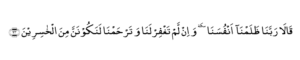
We have wronged ourselves, and if You do not forgive us and have mercy upon us, we will be of the losers.. (Surah Aaraf ;23)
The legacy of Shaitan is self justification, and the legacy of Nabi Adam عليه السلام is humility and acknowledgement.
A form of backbiting is entertaining ill thoughts about others in the mind.
A great saint saw a well dressed young person begging, and thought that he was not justified to beg. In his dream, he was told to eat the decomposing meat!
When he objected, he was told that this was what he had done. Upon awakening, he set out in search of the young person, who explained that he had not eaten for three days, in which case even carrion is permissible to eat, and that someone had given him the garment to wear.
Seeking forgiveness from whom one has backbitten is only necessary if the news has reached him, because he would have felt bad about it. If the news hasn’t reached him, telling him about it will cause him unnecessary harm, so together with Tawbah one should make Dua and read something or do some good and convey the rewards to him.
The Occasions When Backbiting is Permissible
1. An oppressed person can take his complaint to one who can deal with the matter, like the police or judge.
It is haram to mention the wrong to those who cannot stop the oppressor or take any steps to assist.
2. Where people are involved in bidaat or open wrongs, then it is permissible to mention it to prevent them or others from falling into it
3. In the event of a dispute or argument, between spouses or business partners etc, it is necessary to divulge the entire story and expose the faults to a Mufti, because one needs to find out the Shari ruling.
4. If someone wants to get married to or join a business partnership with someone who one knows will be a source of harm, and one is aware of this, then it’s permissible to disclose the faults because the objective is laudable.
5. If someone is well known by a nickname which conveys a fault, like blind or lame, then it’s permissible, though better to use another name if possible, to avoid even the form of gheebat.
When listening to gheebat for a valid reason, we are not allowed to look down at the individual being discussed, because we are unaware of his other good qualities, and whether he has repented or not, or will repent in the future or not!
A person mentioned to Hazrat Haji Imdadullah Sahib رحمه الله that a certain individual was making statements of shirk. Hazrat Haji Saheb رحمه الله responded: “Brother! The day one’s own reality dawns upon one, one will regard oneself to be worse than a mushrik!”
Hazrat Haji Sahib رحمه الله tactfully shifted his attention from the external to the internal… from the outer facade to the inner reality and true self…We are guilty of shirk within our own hearts, and with our outer limbs as well. It is not surprising if the forms of shirk total 360 which is equal to the number of the joints in our bodies and idols in and around the Kabah.
Hazrat Haji Saheb رحمه الله was discussing in a Majlis about illness being a bounty. A sick person came to request duas. Hazrat Thanwi رحمه الله wondered how Hazrat Haji Saheb رحمه الله would respond. Hazrat Saheb رحمه الله raised his hands and said: “O Allah! Illness is a bounty, but we are your weak servants, so please replace this bounty of illness with the bounty of health!” Subhanallah!
A person was grieved over not being able to perform Salaah in the Haram, due to illness. Hazrat Haji Saheb رحمه الله later on mentioned that had the person been an Aarif, he would not have been so perturbed. This is because an Aarif gazes at the fact that the closeness to Allah Ta’ala lies in being pleased with the decree of Allah Ta’ala in the condition that He keeps one in at any given time, when this is not volitional.
(Adapted from a majlis of Shaykh Yusuf Gundiwalla حفظه الله)